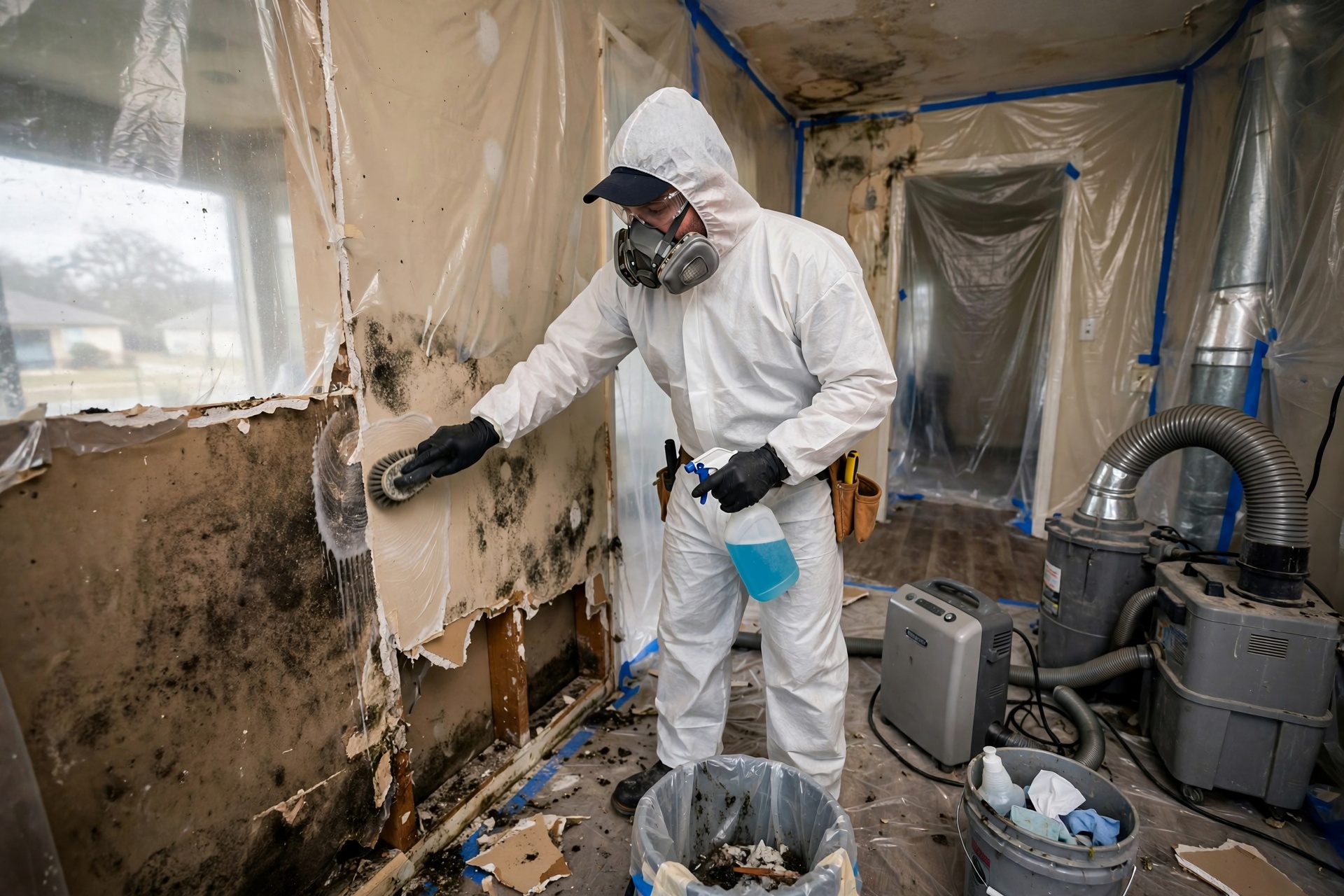
Channelview sits along the San Jacinto River in Harris County where hot humid summers and hurricane season regularly push moisture into older single-story homes built on slabs or with crawlspaces. After any water event, mold colonies can appear within 48 hours on drywall, baseboards, and subflooring because ambient humidity stays high even in mild winters. We focus on source removal rather than surface sprays, using negative-air machines and HEPA filtration to keep spores from migrating into unaffected rooms while we cut out saturated materials.
Many properties in Cloverleaf and along Sheldon Road have original plaster or wood framing that traps water behind layers, so we open walls at least 18 inches past visible growth and check insulation and electrical boxes. Post-storm jobs near Channelview Park often involve hidden growth in HVAC returns because river flooding raises groundwater levels and forces moisture upward through slab edges. We document moisture readings at multiple depths before and after drying to satisfy insurance adjusters and local code requirements for habitable space.
Hurricane-driven rain can overwhelm gutters and push water under exterior doors, so we always test adjoining rooms even when the homeowner reports damage only in one hallway. In these cases we run commercial dehumidifiers sized for the square footage and monitor daily until relative humidity inside the containment drops below 50 percent. This prevents secondary growth on previously dry surfaces and reduces the chance of callbacks during the next humid stretch.
Technician insight
In Channelview, the thing that catches most people out with post-water-damage mold remediation is how fast mold returns when slab edges stay damp after San Jacinto River flooding. Homeowners often stop drying too soon because the surface feels dry, yet the humidity under the slab keeps feeding growth behind baseboards for weeks.
Cloverleaf Home After Heavy Rains
Water entered under the back door during a summer storm and wicked into the hallway drywall. We found active growth extending two feet up the wall and into the return-air plenum. After removing the wet drywall and running dehumidifiers for four days, the home passed clearance testing with no detectable mold odors.
Post-water-damage Mold Remediation Services We Offer
✓Flood-Damaged Drywall Mold Remediation
Cut and remove mold-affected drywall and insulation after river or storm flooding, then treat framing with EPA-registered antimicrobials.
✓Crawlspace Mold Treatment After Water Intrusion
Address standing water and mold growth under Channelview homes by removing contaminated soil and installing vapor barriers.
✓HVAC Mold Cleaning Post-Leak
Clean and sanitize ductwork and coils when water from roof leaks or humidity has allowed mold to colonize the system.
✓Subfloor Mold Removal After Slab Leaks
Lift flooring, treat mold on plywood or particleboard, and dry the slab before new underlayment is installed.
✓Emergency Containment for Water-Damaged Rooms
Set up plastic barriers and negative air pressure within hours to stop spore spread while drying equipment runs.
Post-water-damage Mold Remediation Cost in Channelview, TX
| Service | Typical Range | What Affects It |
|---|---|---|
| Small room post-leak remediation | $800–$1,800 | Drywall and baseboard only; increases with insulation removal |
| Crawlspace treatment after flooding | $1,500–$3,200 | Depends on square footage and soil removal needs |
| HVAC system cleaning | $600–$1,400 | Ductwork only; coils add to the range |
| Full-home drying after hurricane | $2,500–$5,500 | Multiple rooms and daily equipment rental |
Ranges are typical for Channelview, TX and confirmed with an exact written quote before any work starts.
How it works
- 1
Initial Moisture Mapping
We use moisture meters and infrared cameras to locate all wet materials in Channelview homes, including hidden areas behind cabinets and under flooring.
- 2
Containment Setup
Plastic sheeting and air scrubbers isolate the work zone so spores do not travel to living areas during demolition.
- 3
Removal and Cleaning
Affected drywall, insulation, and trim are removed; remaining surfaces are HEPA-vacuumed and treated.
- 4
Drying Verification
Commercial dehumidifiers and air movers run until readings confirm the structure is dry, then we clear the site for repairs.
Pricing
Pricing varies by affected square footage, depth of water intrusion, and whether HVAC or crawlspace work is required.