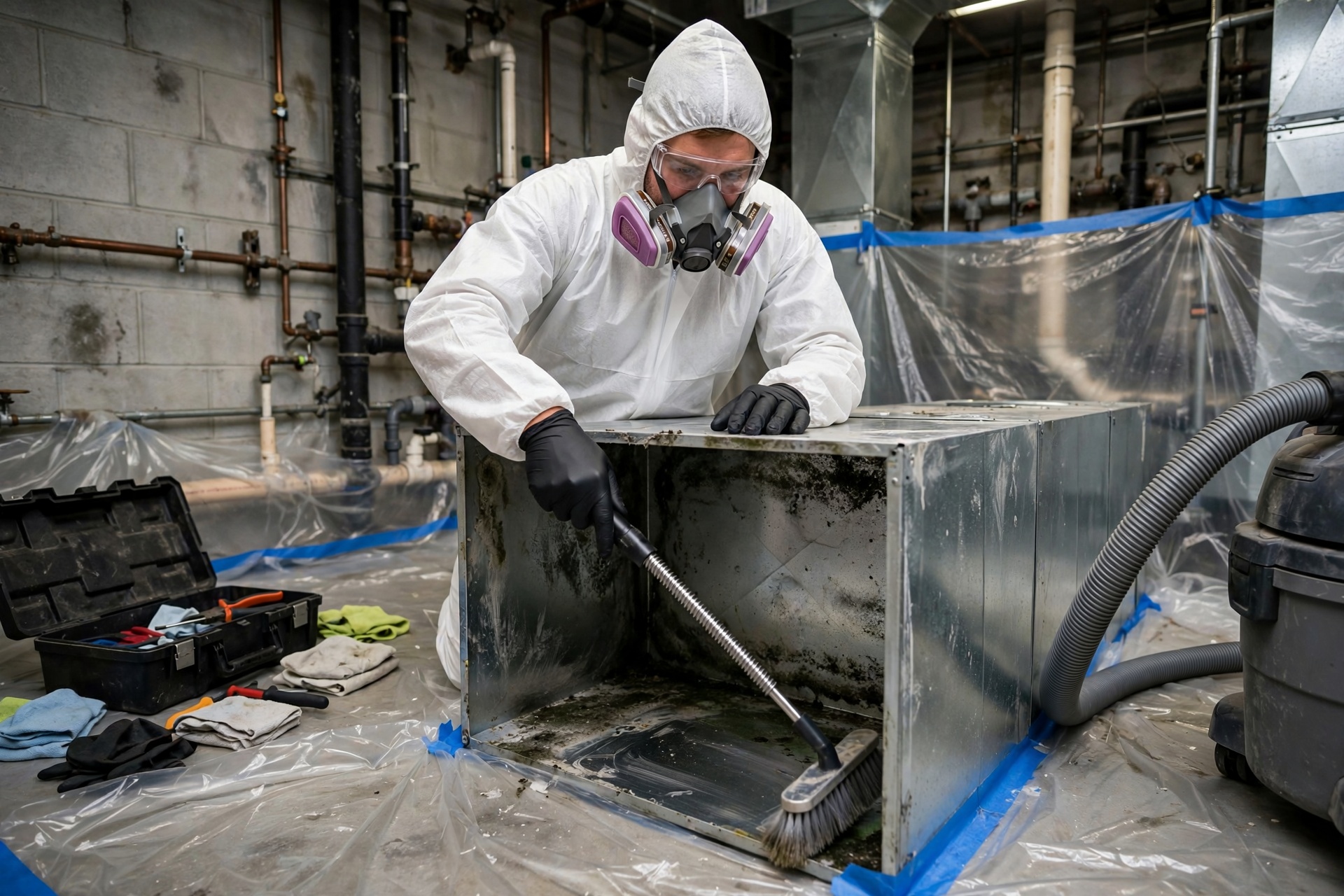
Channelview and Cloverleaf homes often sit close to the San Jacinto River where summer humidity stays elevated for months. This moisture travels through return ducts and condenses on metal surfaces inside air handlers, especially in homes built before 1990 that lack modern vapor barriers. Technicians must pull registers, camera the full run, and treat both supply and return sides because river-driven humidity keeps feeding growth even after visible patches are gone.
Hurricane season brings sudden flooding that pushes water into crawl spaces and slab ducts common in Harris County neighborhoods. When that water mixes with the mild winter temperatures, mold colonies expand inside the blower compartment and flex duct runs. Remediation here requires negative-air machines rated for the home’s square footage plus antimicrobial coatings that hold up when the next storm raises indoor moisture again.
La Porte and Baytown commuters often close their homes tight during the workday, trapping humidity inside the HVAC loop. This creates edge cases where mold hides behind insulation on duct elbows or inside the evaporator coil housing. Proper work includes removing and replacing porous liner sections rather than surface spraying, then verifying clearance with post-remediation air sampling before the system is returned to service.
Technician insight
In Channelview the thing that catches most people out with HVAC and air duct mold remediation is the San Jacinto River humidity that keeps re-wetting the return plenum even after the visible growth is gone. Older homes near Channelview Park often have original flex duct that soaks up moisture during hurricane season and never dries out, so surface sprays alone fail. You have to cut out the liner and replace the runs or the mold returns the next humid summer.
River-adjacent home after summer storms
A Channelview house near the San Jacinto River showed musty odors from the vents after repeated heavy rains. Camera inspection found heavy growth inside the return plenum and several flex runs. Crews isolated the system, removed contaminated sections, treated the air handler, and verified clearance with air samples before restoring full operation.
HVAC and Air Duct Mold Remediation Services We Offer
✓Ductwork Camera Inspection
Full-run video inspection of supply and return lines to locate hidden colonies behind elbows and in flex sections common in Channelview homes.
✓Air Handler Mold Removal
Disassembly and treatment of blower compartments and coil housings where river humidity condenses and feeds growth inside older units.
✓Return Air Plenum Cleaning
Targeted removal of mold from large return plenums that pull moist air from crawl spaces near the San Jacinto River.
✓Flex Duct Replacement
Removal and replacement of porous flex runs that cannot be fully cleaned after prolonged exposure to Channelview’s humid summers.
✓Coil and Blower Sanitization
Deep cleaning and antimicrobial application to evaporator coils and blowers to stop regrowth during mild winter humidity spikes.
HVAC and Air Duct Mold Remediation Cost in Channelview, TX
| Service | Typical Range | What Affects It |
|---|---|---|
| Full HVAC and duct inspection | $250–$450 | Higher when multiple stories or long flex runs require extra access time. |
| Air handler mold removal | $600–$1,200 | Varies with coil condition and whether new insulation must be installed. |
| Flex duct section replacement | $150–$350 per run | Price rises when runs are in tight attics common in Cloverleaf homes. |
| Post-remediation air sampling | $200–$350 | Required for insurance documentation in Harris County properties. |
Ranges are typical for Channelview, TX and confirmed with an exact written quote before any work starts.
How it works
- 1
Initial Assessment
Technician arrives within hours, reviews system layout, and uses cameras to map every accessible duct run in the Channelview home.
- 2
Containment Setup
Negative-air machines and plastic barriers isolate the HVAC system from living spaces before any disassembly begins.
- 3
Source Removal
Contaminated insulation, flex sections, and surface growth are physically removed rather than encapsulated.
- 4
Final Verification
Post-treatment air sampling confirms clearance before the system is restarted and the home is returned to normal use.
Pricing
Cost depends on system size, number of duct runs, and whether flex sections must be replaced after hurricane-related moisture events.