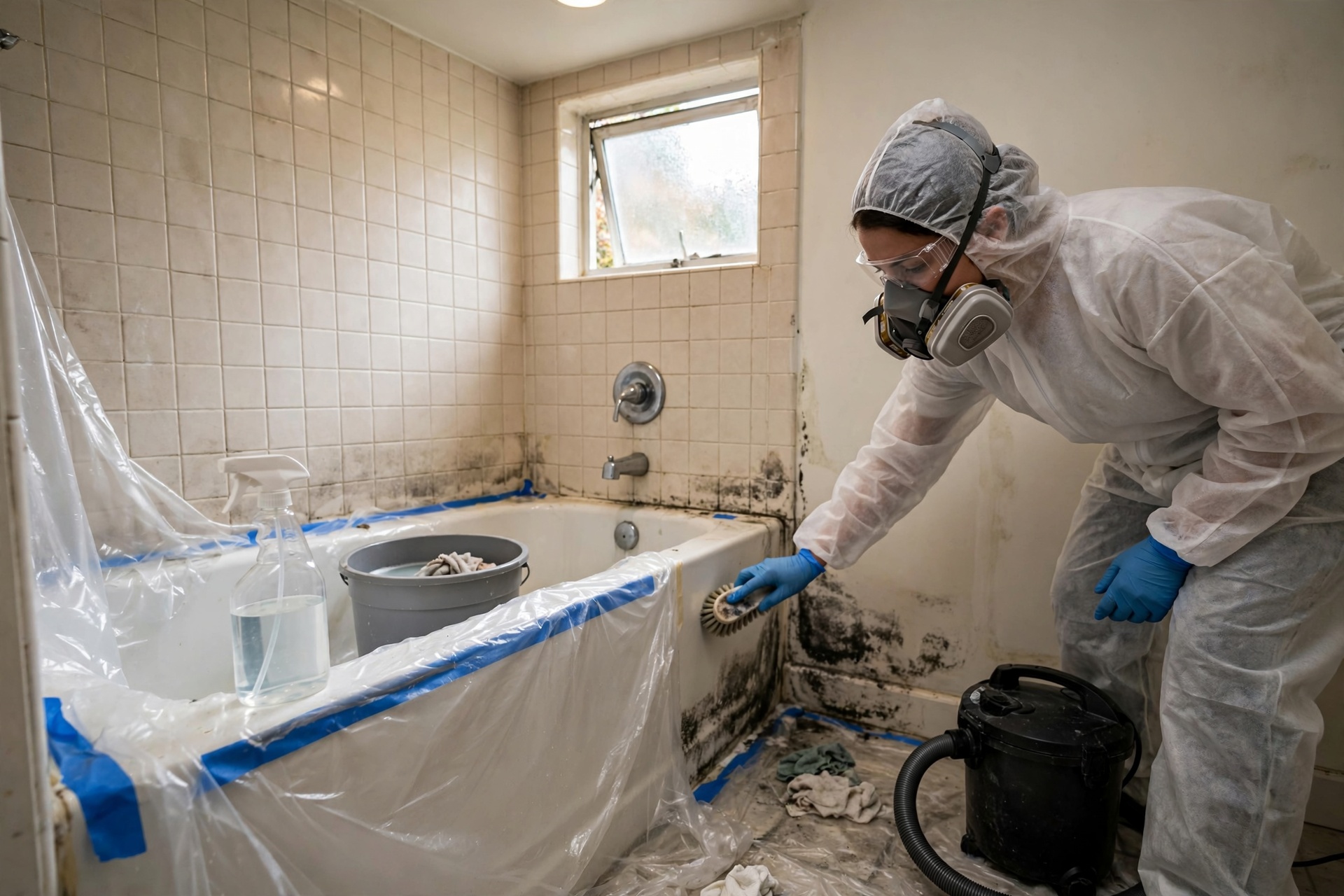
Bathrooms in Channelview homes built before the 1990s often feature original tile and drywall that trap moisture from daily showers in hot humid summers. Mold frequently grows behind vanities and along baseboards where poor ventilation meets the steady humidity coming off the San Jacinto River. Technicians must remove affected drywall sections without disturbing plumbing lines common in these older layouts while containing spores so they do not reach living areas.
Hurricane season brings additional water intrusion through windows and roofs in Cloverleaf and Channelview, pushing moisture into bathroom walls and under tubs. Remediation crews check for hidden growth in subfloors and behind shower pans, using moisture meters calibrated for the region's clay-heavy soils that hold water longer after storms. Proper drying with commercial equipment prevents recurrence before new materials are installed.
Homeowners in Harris County sometimes attempt bleach cleaning on visible spots, but this leaves roots in porous grout and behind fixtures. Professional removal includes HEPA vacuuming, antimicrobial treatment on remaining surfaces, and addressing the source such as leaking shower valves or inadequate exhaust fans that fail during mild winters when windows stay closed.
After removal, crews inspect adjacent rooms because mold spores travel easily through shared HVAC ducts in Channelview's ranch-style homes. Final clearance testing confirms levels are safe before the bathroom returns to use, especially important for families near Channelview Park where outdoor humidity stays elevated year-round.
Technician insight
In Channelview, the thing that catches most people out with Bathroom mold removal is how the clay soil around Cloverleaf holds water after even mild rains, keeping crawlspaces and slab edges damp so bathroom mold returns within months if the exterior grading is not addressed at the same time.
Hidden growth after summer leaks
A Channelview homeowner noticed a musty smell in the bathroom after heavy summer rains near the San Jacinto River. Inspection found mold behind the tub surround where a small roof leak had soaked the drywall over several weeks. Crews removed the wet sections, dried the cavity, treated remaining surfaces, and advised on improved ventilation to keep humidity from the river from causing repeat issues.
Bathroom Mold Removal Services We Offer
✓Shower Tile Grout Mold Removal
Deep cleaning and treatment of grout lines in showers where river humidity keeps surfaces damp, preventing black mold from returning in Channelview bathrooms.
✓Vanity and Cabinet Mold Remediation
Removal of mold behind and under bathroom vanities common in older Cloverleaf homes where leaks go unnoticed until odors appear.
✓Tub and Shower Pan Moisture Treatment
Drying and sealing areas under tubs after hurricane-related leaks that allow mold to form in the pan and surrounding drywall.
✓Bathroom Exhaust Fan Mold Prevention
Cleaning and upgrading fans that fail to clear steam in humid Harris County summers, reducing future growth on ceilings and walls.
✓Drywall and Baseboard Mold Replacement
Cutting out and replacing water-damaged drywall and baseboards in bathrooms affected by repeated moisture from the San Jacinto River area.
Bathroom Mold Removal Cost in Channelview, TX
| Service | Typical Range | What Affects It |
|---|---|---|
| Visible surface mold only | $350–$650 | Higher when grout and caulk must be fully replaced in older tile showers. |
| Behind vanity or cabinet growth | $600–$950 | Increases if plumbing access requires cutting additional drywall. |
| Post-hurricane tub area remediation | $800–$1,400 | Reflects extra drying time needed after flooding near the San Jacinto River. |
| Full bathroom drywall and baseboard replacement | $1,200–$2,000 | Varies with home age and amount of original plaster versus drywall in Channelview houses. |
Ranges are typical for Channelview, TX and confirmed with an exact written quote before any work starts.
How it works
- 1
On-Site Inspection
Technician checks all bathroom surfaces, measures moisture levels, and identifies hidden growth behind fixtures using tools suited to local humidity patterns.
- 2
Containment Setup
Plastic barriers and negative air machines isolate the bathroom so spores stay out of hallways and other rooms in the home.
- 3
Removal And Cleaning
Affected materials are removed, surfaces are HEPA vacuumed and treated, and sources like leaks are noted for the homeowner.
- 4
Drying And Final Check
Commercial drying equipment runs until readings are safe, followed by clearance testing before the space is returned to use.
Pricing
Pricing depends on the extent of hidden growth and materials that need replacement after storms or ongoing humidity exposure.